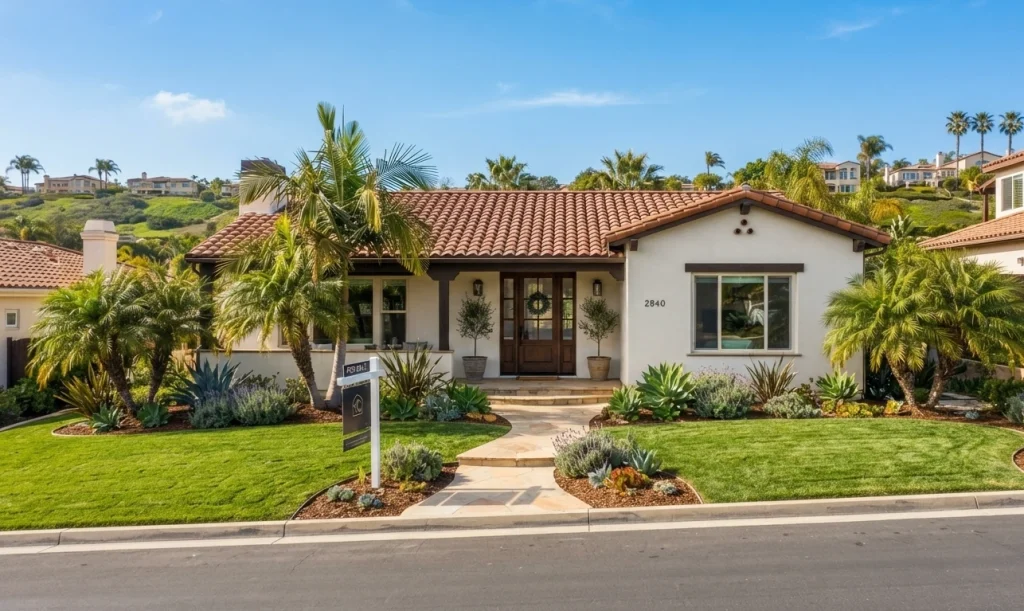
Understanding What Your San Diego Home Is Worth
Your home is more than a place to live. For many homeowners, it also represents a substantial financial asset.
Understanding its current market value can help you prepare for a sale, evaluate future plans, or make informed decisions about your property.
However, determining a San Diego home’s value requires more than entering an address into an online calculator.
Property condition, neighborhood location, recent sales, improvements, lot characteristics, and current market activity all contribute to a home’s potential selling price.
San Diego is made up of communities with different housing inventories and neighborhood characteristics. A historic home in Mission Hills may appeal to buyers for different reasons than a condominium in Hillcrest or a detached residence in Kensington.
These differences make local market knowledge especially important.
A property-specific evaluation helps homeowners understand how their home compares with similar properties and how current buyers may interpret its features.
What Is Market Value?
Market value generally refers to the estimated amount a property may command under typical market conditions.
It reflects the interaction between available housing, buyer demand, property characteristics, and current economic circumstances.
Market value is not necessarily the same as a homeowner’s preferred selling price.
It also differs from the amount originally paid for the property.
A home’s value can change as market conditions evolve or as improvements and maintenance affect its condition.
The price achieved in an actual sale also depends on negotiations, contract terms, and the circumstances of the transaction.
Factors That Influence Your Home’s Value
Location
Location is a fundamental component of real estate value.
However, neighborhood names alone do not determine a property’s worth.
Homes within the same community can differ in proximity to amenities, traffic exposure, street conditions, views, and surrounding development.
For example, a property near an active commercial corridor may provide convenient access to restaurants and businesses.
Another home several blocks away may offer a different residential environment.
Buyer preferences influence how these characteristics are reflected in the market.
Property Size and Layout
Living area, bedroom count, bathroom count, and floor plan influence buyer comparisons.
Usable space is important.
Two properties with similar square footage may provide different experiences because of room configuration, storage, or outdoor access.
Condition and Maintenance
A well-maintained property may require fewer immediate repairs.
Roofing, plumbing, electrical systems, exterior materials, and other building components contribute to overall condition.
Deferred maintenance can influence buyer expectations and negotiations.
Improvements and Renovations
Updated kitchens, bathrooms, and building systems may affect value.
However, renovation cost does not necessarily equal added market value.
The quality, relevance, and condition of improvements matter.
Lot Characteristics
Lot size, configuration, usable outdoor space, landscaping, parking, and access can influence a property’s appeal.
In neighborhoods with varied terrain, elevation and lot usability may also be important.
Market Conditions
Housing supply, buyer activity, financing costs, and economic circumstances affect real estate values.
A property’s estimated value should therefore be reviewed using current information.
Why San Diego Neighborhood Differences Matter
San Diego’s housing inventory varies considerably across communities.
North Park, South Park, Mission Hills, Kensington, Hillcrest, and surrounding neighborhoods offer different combinations of architecture, housing density, and amenities.
A home’s market position should reflect the properties buyers are likely to consider as alternatives.
North Park
North Park includes historic residences, renovated homes, condominiums, and properties near active commercial corridors.
Architectural character, parking, condition, and location can affect comparisons.
South Park
South Park features established residential streets and historic homes.
Original architectural details and renovation quality may be important considerations.
Mission Hills
Mission Hills contains varied architecture and lot configurations.
Views, elevation, condition, and property characteristics can influence market positioning.
Kensington
Kensington’s established homes include Spanish-inspired architecture and other traditional styles.
Condition, improvements, layout, and lot features should be evaluated.
Hillcrest and Bankers Hill
These communities include condominiums and other residential property types.
Association expenses, amenities, parking, building condition, and location may influence comparisons.
How a Comparative Market Analysis Works
A comparative market analysis, often called a CMA, evaluates relevant real estate activity to estimate a property’s market position.
It generally considers recently sold properties, active listings, and pending transactions.
Recently Sold Properties
Closed sales provide information about completed transactions.
Comparable properties should share relevant characteristics with the home being evaluated.
Active Listings
Active listings show current competition.
They provide insight into available alternatives and asking prices.
However, an asking price does not establish what a buyer will ultimately pay.
Pending Transactions
Pending sales can provide context about recent market activity.
Final prices may not be available until closing.
Property Adjustments
Comparable homes rarely match perfectly.
Differences in size, condition, lot characteristics, parking, and improvements may need to be considered.
A thoughtful evaluation explains these differences rather than treating all nearby homes as interchangeable.
Why Automated Home Estimates Can Differ
Online valuation tools use available property data and automated models to generate estimates.
These tools can be useful for preliminary research, but they have limitations.
An algorithm may not fully recognize a recent renovation, unusual floor plan, significant maintenance issue, or property-specific feature.
Publicly available information may also be incomplete or outdated.
For example, a home may have undergone substantial improvements that are not reflected accurately in an automated estimate.
Conversely, an online tool may not recognize deferred maintenance that affects the property’s condition.
These limitations make automated estimates a starting point rather than a substitute for a property-specific evaluation.
Market Value vs. Appraised Value
Market value and appraised value are related concepts, but they serve different purposes.
A real estate market evaluation helps establish an estimated selling position based on relevant market activity.
An appraisal is a formal valuation completed by a qualified appraiser for a specific purpose, such as mortgage lending.
Appraisers follow professional standards and evaluate information relevant to the assignment.
An appraisal result may differ from a listing recommendation or final negotiated sale price.
Homeowners should understand which type of valuation is needed for their situation.
Does Renovating Increase Home Value?
Home improvements may influence marketability and value, but the financial return varies.
A renovation should be evaluated according to its cost, quality, relevance, and the expectations of buyers considering similar homes.
Kitchen Improvements
An updated kitchen may improve functionality and presentation.
However, expensive finishes do not guarantee an equivalent increase in sale price.
Bathroom Updates
Bathroom improvements can address maintenance concerns and improve usability.
The appropriate scope depends on the property’s condition and competing inventory.
Exterior Improvements
Landscaping, exterior repairs, and maintenance can improve the first impression of a home.
These projects may support presentation without requiring extensive construction.
Major System Updates
Roofing, plumbing, electrical, and other building systems can influence buyer confidence and maintenance expectations.
Their contribution to market value depends on the property’s overall condition and comparable alternatives.
When Should You Request a Home Valuation?
A market evaluation can be useful in several circumstances.
Before Selling
Understanding your home’s estimated value helps establish a listing strategy and prepare financial expectations.
Before Making Major Improvements
A market evaluation can provide context when considering substantial renovation expenses.
When Reviewing Long-Term Plans
Homeowners may want to understand their equity position or consider future housing decisions.
When Evaluating an Investment Property
Property owners may use current value information as part of a broader investment review.
A market evaluation does not replace financial, tax, or legal advice.
Preparing for a Property Evaluation
Homeowners can support an accurate review by organizing relevant information.
Useful materials may include records of renovations, permits, major repairs, equipment replacement, and other improvements.
The property’s current condition should also be considered.
If there are known issues, disclosing them during the evaluation can help establish realistic expectations.
A thorough review should examine both the home’s strengths and the factors that may influence buyer decisions.
Turning Valuation Information Into a Selling Strategy
Once a reasonable value range has been established, homeowners can consider how to position the property.
The asking price should reflect current market conditions, property characteristics, and available competition.
Preparation and marketing should support that positioning.
Professional photography, accurate descriptions, property documentation, and appropriate exposure can help prospective buyers understand the home.
Market activity should continue to be monitored after listing.
Showing activity and buyer feedback may provide additional information, but they should be interpreted alongside comparable sales and current competition.
Frequently Asked Questions About San Diego Home Values
How can I find out what my San Diego home is worth?
A property-specific market evaluation can review comparable sales, current competition, condition, improvements, and neighborhood characteristics.
Are online home value estimates accurate?
Automated estimates provide preliminary information but may not account for important property-specific details.
What affects home value the most?
Location, property characteristics, condition, improvements, and market activity all contribute to value.
Does remodeling always increase a home’s value?
No. The effect depends on the improvement, cost, quality, and buyer expectations.
How often should I review my home’s value?
The appropriate frequency depends on your goals. A current evaluation is particularly useful when preparing to sell or making significant property decisions.
Is my property’s tax assessment the same as market value?
No. Assessed value and market value serve different purposes and may differ.
Can two homes on the same street have different values?
Yes. Differences in size, condition, layout, improvements, and lot characteristics can influence value.
Discover Your San Diego Home’s Value With Joe Carta
Understanding your home’s value begins with an evaluation of its unique characteristics and the current local real estate market.
Whether you are preparing to sell, considering improvements, or exploring your next move, Joe Carta can help you review your property’s market position and discuss your real estate goals.
Contact Joe Carta today to request a personalized San Diego home valuation and take the next step with greater clarity.